
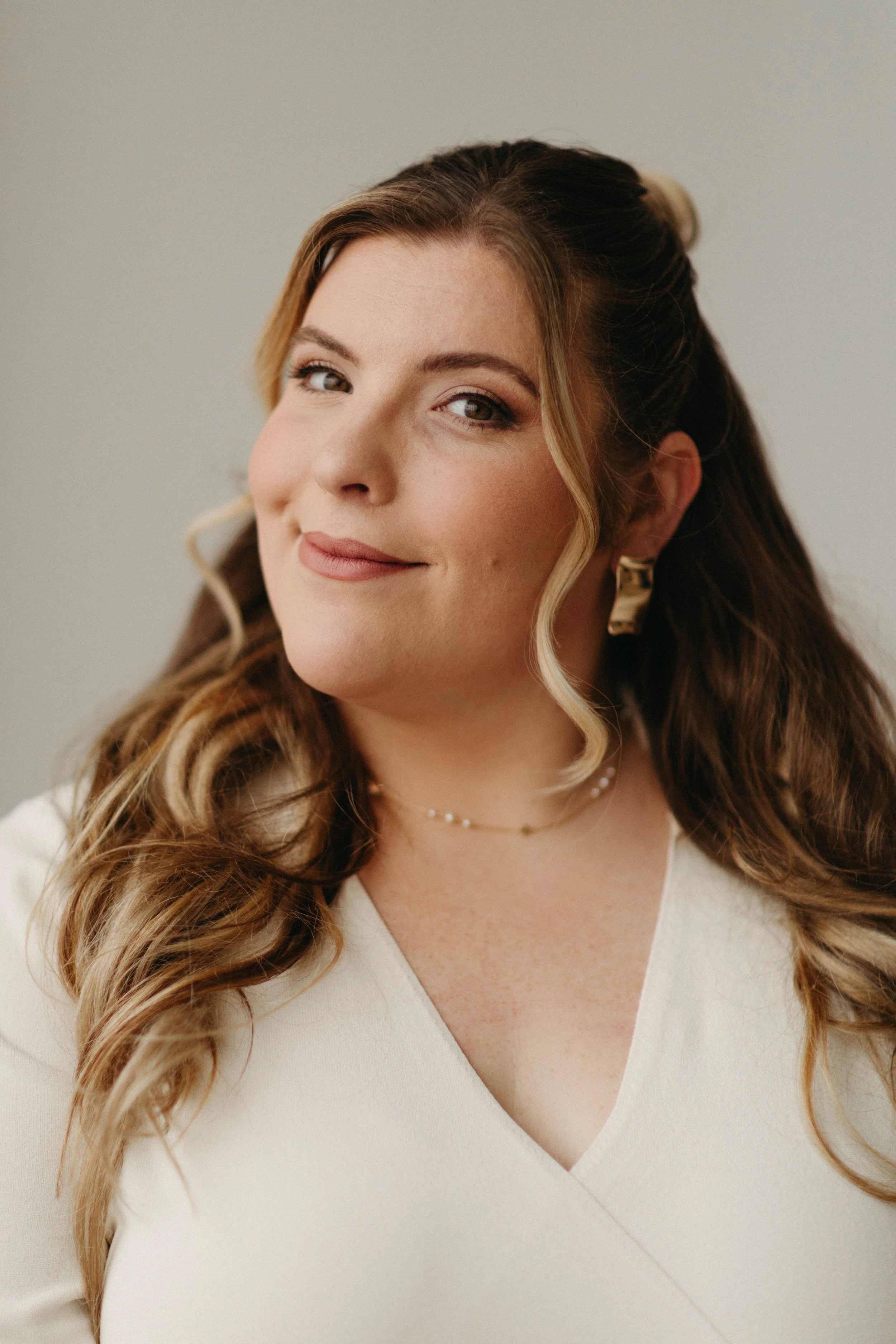
Meet Lauren Winick, LCSW
Founder of Every Body Therapy
I’m a trauma-specialized psychotherapist, clinical supervisor, consultant, and founder of Every Body Therapy. My work is relational, direct, socially conscious, and rooted in the belief that people make sense in context.
I help clients understand the patterns, protections, symptoms, and survival strategies that formed around pain, trauma, shame, identity, relationships, and the systems they have lived within.
I built Every Body Therapy to hold more of the truth.
So many people come to therapy having learned to overfunction, shut down, shapeshift, numb out, intellectualize, please, perform, or turn against themselves in order to survive. Those patterns often carry intelligence. They also carry cost.
Every Body Therapy grew out of my belief that therapy should be clinically deep, relationally honest, trauma-informed, identity-conscious, and grounded in the real conditions of people’s lives. Our work does not separate emotional suffering from the body, relationships, culture, power, trauma, or the systems people have had to navigate.
Here, care is thoughtful, attuned, and active. We believe in depth. We believe in accountability. We believe in naming what is happening with enough compassion and clarity for something new to become possible.
How I Work
My therapeutic style is engaged, relational, and direct. I listen closely, track patterns carefully, and work actively with clients to create meaningful, sustainable change.

Relational and attachment-attuned
Therapy works through the relationship itself. I pay close attention to what happens between us, including trust, rupture, repair, protection, avoidance, longing, and the places where old patterns begin to show up in real time.

Direct, perceptive, and clinically active
Clients often come to me when they want a therapist who will be honest, perceptive, challenging, and deeply present. I name patterns clearly while staying grounded, respectful, and connected.

Trauma-specialized + body-liberation aligned
My work is rooted in trauma therapy, Health at Every Size, body liberation, and a socially conscious understanding of mental health. I hold symptoms and coping strategies as meaningful adaptations rather than personal failures.
Clinical areas I work with:
My clinical work is trauma-specialized and informed by a decade of experience with PTSD, CPTSD, eating disorders, body image, personality disorders, identity-related stress, relationship patterns, anger, self-abandonment, and survival strategies.
-
I work with the ways trauma shapes the nervous system, relationships, identity, shame, boundaries, emotional regulation, and the capacity to feel safe with oneself and others.
-
My work is grounded in Health at Every Size, anti-fat bias awareness, and a body-liberation framework that understands food and body distress within personal, relational, cultural, medical, and systemic context.
-
I support clients working through panic, obsessive patterns, depressive states, suicidality, emotional overwhelm, and the protective strategies that can begin to narrow a person’s life.
-
I work from an LGBTQ+ affirming, kink-affirming, sex-positive, and socially conscious lens that recognizes how culture, power, identity, and marginalization shape mental health.
-
I help clients understand the patterns they bring into intimacy, family, conflict, rupture, repair, desire, disappointment, and the longing to be known without having to perform.
-
Many of my clients have survived by becoming capable, perceptive, impressive, useful, or controlled. We work with the emotional cost of that adaptation and the possibility of living with more room.
-
I work with clients navigating chronic illness, disability, pain, medical trauma, diagnostic uncertainty, flare cycles, grief, body changes, dependency, invisibility, and the emotional toll of being dismissed, misunderstood, or forced to constantly self-advocate.
The clinical path that shaped this practice
I began my career in the FDNY’s Counseling Services Unit, supporting people whose work exposed them to daily trauma, pressure, anger, loss, and maladaptive coping patterns. That early work shaped my understanding of trauma as cyclical, relational, embodied, and often carried through shame, protection, and survival.
From there, my clinical work expanded across private practices focused on LGBTQ+ affirming care, sex-positive and kink-affirming therapy, mood and anxiety disorders, suicidality, acute emotional distress, eating disorders, body image, and body liberation.
Those experiences became the foundation of Every Body Therapy: a practice built around depth, nuance, relational honesty, trauma-informed care, and a refusal to separate people’s pain from the context in which it developed.
Training and clinical background
For those who want a deeper look at my clinical training, background, and therapeutic influences, you can explore more below.
-
I hold a Master of Social Work from Columbia University. I completed post-graduate training in substance use and chemical dependency through Yale School of Medicine.
My early clinical foundation included intensive work with trauma, substance use, anger, aggression, mood disorders, anxiety, suicidality, acute emotional distress, eating disorders, body image, and identity-related stress.
-
My work is deeply informed by trauma therapy. I trained in EMDR under Dr. William Zangwill and am currently studying with Dr. Janina Fisher as I work toward advanced certification in CPTSD.
I am also training in Cognitive Processing Therapy with Dr. Kate Chard, co-founder of the modality, and I am in the process of becoming certified in Prolonged Exposure Therapy through the University of Pennsylvania’s Perelman School of Medicine.
-
Clients often come to me when they want a therapist who is warm, honest, incisive, relationally present, and clinically active.
Many are thoughtful, high-functioning, self-aware people who have already done a lot of work and are ready for therapy that goes deeper. They may be navigating trauma, relationship patterns, identity questions, perfectionism, shame, body distress, grief, anxiety, depression, dissociation, or the exhaustion of holding everything together.
-
I draw from EMDR, IFS, PE, CPT, DBT, ACT, psychodynamic therapy, attachment-based therapy, and family systems thinking.
I do not use these approaches rigidly. I integrate them based on the client, the relationship, the nervous system, the history, the presenting concern, and what is clinically useful in the moment.
-
My work with eating disorders and body image is grounded in Health at Every Size, body liberation, anti-fat bias awareness, and an understanding of how shame, trauma, control, identity, and culture shape a person’s relationship with food and body.
I am especially interested in the ways body distress can become entangled with trauma, attachment, perfectionism, dissociation, medical systems, family dynamics, and the pressure to become more acceptable to others.
Consulting, teaching, and clinical leadership
In addition to psychotherapy, I offer clinically informed workshops, trainings, and consultation for organizations, therapy practices, and teams.
My consulting work focuses on the psychology of people, systems, and leadership: burnout, communication, role clarity, group dynamics, supervision, emotional labor, conflict, boundaries, and the often-unspoken relational patterns that shape how teams function.