A New Year’s Reality Check: Traditions, Togetherness, and the Truth Behind the Holidays
The holiday season arrives each year in a flurry of glittering lights, familiar songs, and feel-good commercials. We’re told it’s a time for gratitude, togetherness, and fresh starts as the New Year dawns. But scratch the shiny surface, and a more complicated picture emerges. The same time of year that brings beloved traditions and celebrations also brings stress, loneliness, and stark social injustices. In this article, we take a hard look at the holidays – not to declare them “good” or “bad,” but to honestly examine all of it: the nostalgia and the nerves, the commerce and the chaos, the connections and the isolation.
Warm Traditions and Holiday Nostalgia
One thing that makes the holidays so special is the rituals we return to year after year. Many of us find comfort in replaying the past – whether it’s re-watching Home Alone for the 20th time or baking that same family cookie recipe our grandmother used. In fact, surveys show that a vast majority of people derive real comfort and joy from these familiar rituals. For example, 72% of Americans agreed that watching their favorite holiday movies brings them comfort. Psychological research supports this cozy nostalgia: engaging in traditions (like annual movie nights or decorating together) can strengthen social bonds and boost our well-being. Especially in tough times, revisiting “It’s a Wonderful Life” or putting on the same old Bing Crosby record isn’t just cheesy fun – it’s a source of stability in an unsteady world.
But even as we cherish our holiday habits, we often joke about the downsides. It’s practically a running gag that family gatherings during the holidays are awkward or fraught – the stuff of comedy skits and memes. You know the jokes: the clashing political opinions at the dinner table, the nosy relative asking intrusive questions, the “pass the wine, this is uncomfortable” humor that gets traded around. These jokes resonate because, for many, they ring true.
In one recent poll, 35% of Americans said “challenging family relationships” contribute to their holiday stress. Popular culture has turned the dysfunctional holiday dinner into a familiar trope, suggesting that behind many a smiling family photo is a degree of tension. We chuckle about the bickering in National Lampoon’s Christmas Vacation or the chaotic extended-family in-jokes likely because it’s easier to laugh than to face the reality that togetherness can be complicated. The holidays put a spotlight on family dynamics – good, bad, and ugly – and many people cope through humor about the annual “survive the family” routine.
The Business of the Holidays: Big Money and Major Spectacle
While the holidays are wrapped in messages of love and goodwill, they’re also undeniably big business. During the winter holiday season, Americans spend staggering sums on gifts, travel, and celebration – an amount that grows nearly every year. In the United States, retail sales during the 2024 holiday season hit a record high of $994.1 billion (yes, almost one trillion dollars). This figure, which excludes automobile and gasoline sales, underscores how crucial November-December shopping is to the economy. Retailers bank on our collective urge to make the season “special,” and in 2024 consumers delivered with spending growth back to pre-pandemic levels. From Black Friday doorbusters to last-minute New Year’s Eve outfit splurges, the holiday marketing machine successfully gets us to open our wallets wide.
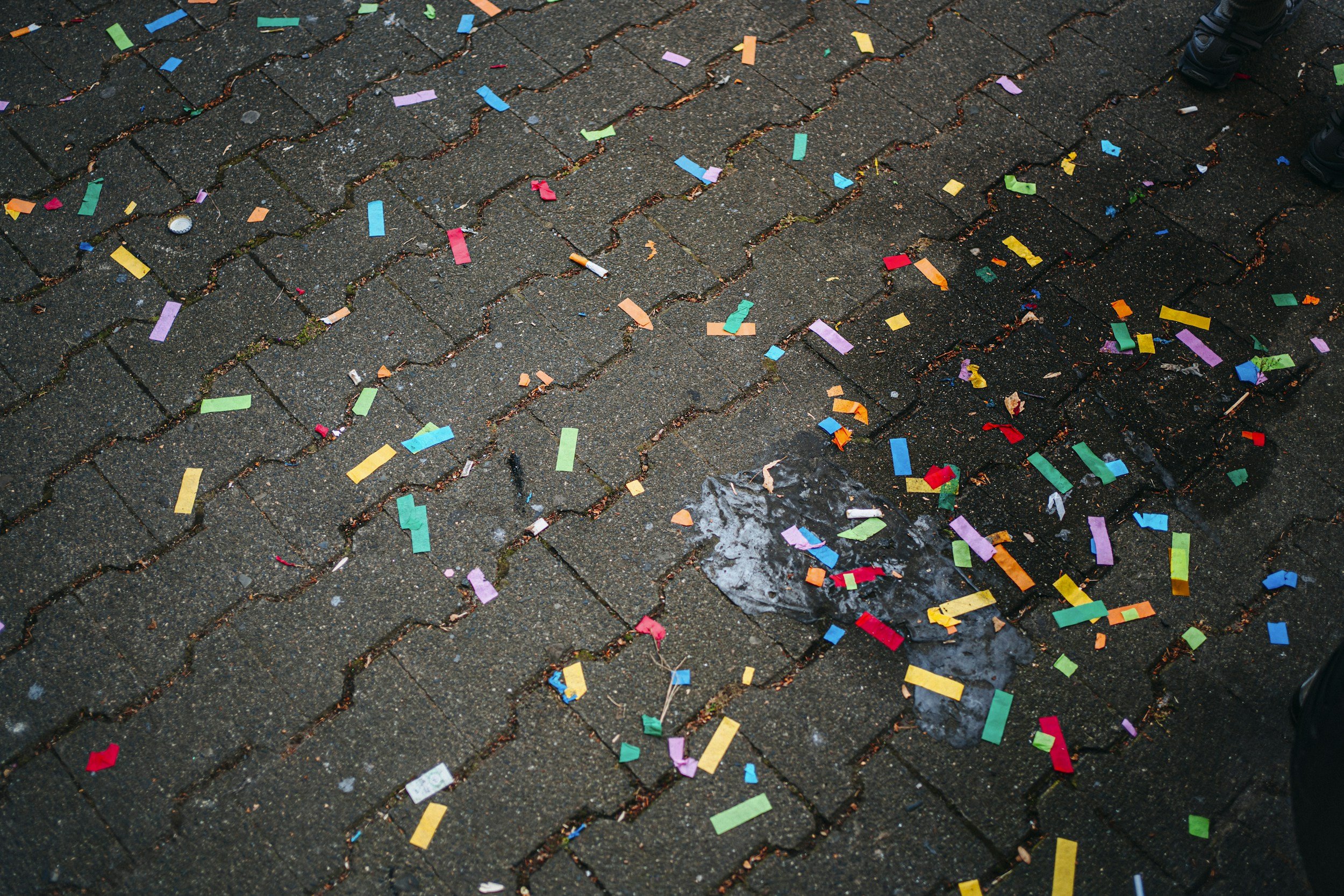
Take Time’s Square in New York City, for example.Every New Year’s, about one million revelers pack into the city for the countdown and ball drop. It’s a spectacle of massive scale – and it doesn’t come cheap. New York City’s sanitation department spends on the order of $50,000 over two days to prepare for and clean up after that one night. In the first hours of the new year, 300 sanitation workers sweep up more than 50 tons of confetti, trash and debris from the streets of Midtown Manhattan. (That’s roughly the weight of 100,000 pounds of party remnants – everything from soggy confetti and noisemakers to lost shoes and champagne bottles.) The iconic ball drop event itself is free to attend, but the costs – from police overtime to sanitation – are absorbed by the city. It’s a striking example of how much effort and money go into staging and maintaining the holiday magic. The contrast can be jarring: tens of thousands of dollars and hundreds of workers mobilized to sweep up a single night’s celebration, while just blocks away there may be people struggling to find a warm place to sleep.
Beyond the headline events, the commercialization of the holidays permeates everyday life. Retailers launch holiday sales earlier each year, and advertisements relentlessly encourage us to buy more – often equating spending with love (“show them you care with the perfect gift!”). This pressure to consume can take a financial toll on families. Surveys show nearly half of American parents feel compelled to go into debt to afford holiday gifts for their kids – in one 2024 survey, 49% of parents expected to incur debt, spending an average of $461 per child on presents. Many working- and middle-class parents scrimp and save or run up credit cards to give their children a “good Christmas.” Meanwhile, wealthier families might indulge lavishly or opt out of consumerism altogether, highlighting a stark class divide in holiday experiences. As one anthropology professor noted, there are “relentless commercial pressures [that] equate good parenting with continual consumption,” even when it strains budgets and causes stress.
The holiday season’s economic engine is a double-edged sword: it can boost the economy and create jobs, but it also reinforces inequalities and financial anxieties for many individuals trying to keep up with Hallmark ideals.
Packaged Togetherness vs. Lonely Reality
Perhaps the biggest gap between holiday mythology and reality lies in the promise of togetherness. From Hallmark movies to countless ads, we’re bombarded with images of happy families and friends toasting together, caroling, and exchanging gifts by a cozy fire. Gratitude! Joy! Everyone loving and being loved! Sure, for some people, the holidays do bring genuine joy and cherished time with loved ones. But for many others, this season magnifies feelings of loneliness, grief, or inadequacy – a painful contrast to the portrayed ideal.
Research confirms that a majority of Americans struggle with negative emotions during the holidays. A recent survey revealed that 61% of Americans experience feelings of sadness or loneliness during the holiday season, and a striking 37% say they would skip the holidays altogether if they could.
Far from being the “most wonderful time of the year” for everyone, the holidays can intensify isolation and disappointment. Why? One major factor is the social expectation that you should be happy and surrounded by family. When reality doesn’t match that ideal – when you’re grieving a loss, far from family, single when it seems everyone else is coupled, or struggling with mental health – the disconnect can be crushing. As one commentary put it, “the holiday season is supposed to be a time of joy and connection… but for many, the holidays intensify feelings of loneliness, making it difficult to find peace amid the festive season.” The very images of laughter and togetherness that flood our screens can make those who feel alone feel even more alone by comparison.
One particularly sobering insight: studies have found that emergency room visits for mental health crises tend to spike between Thanksgiving and New Year’s. In other words, the period that’s marketed as all about family, love, and togetherness corresponds with an uptick in people experiencing severe emotional distress. Some health systems report a 10–15% increase in behavioral health-related ER visits in the week following major holidays. Whether it’s due to the cumulative stress, the crash after holding it together through a holiday, or truly feeling no way out of the loneliness, the mental health toll is very real. (It’s worth noting that the long-standing myth that suicide rates peak around Christmas is not supported by statistics – they often actually peak in spring – but that doesn’t mean the holidays aren’t extremely hard for those in crisis.) Even short of emergency crises, 64% of individuals say they feel increased feelings of depression or anxiety during the holidays. The “holiday blues” are so common that they’re practically an epidemic of their own.
Why do so many of us feel lonely or down at a time supposedly dedicated to togetherness? Aside from the pressures and financial strain mentioned, consider who gets left out of the standard holiday narrative. Our culture’s ideal assumes you have a loving family to gather with, a partner to kiss at midnight, close friends to throw parties with, or at least someone. In reality, many people are socially isolated – some by circumstance, others by choice – and the holidays shine a harsh spotlight on that isolation. Elderly individuals often feel this acutely, especially if they’ve lost loved ones or live far from family. People who are estranged from family – for instance, due to rejection (sadly common for some LGBTQ+ folks) or past conflicts – may feel they have nowhere to “belong” on days like Thanksgiving or Christmas. Singles without a partner might feel particularly lonely on holidays that others spend with spouses or significant others. Even people in a crowd can feel alone – have you ever felt disconnected in the middle of a party? You’re not the only one. It’s possible to feel loneliness while surrounded by others, especially if those others don’t understand you or if you’re masking struggles behind a forced smile .
Ironically, the intense cultural emphasis on cheer and companionship can make loneliness even more painful. Well-meaning coworkers or neighbors will ask, “What are you doing for the holidays?” – an innocent question, but for someone who is going to be alone, answering can be awkward. There’s often an immediate pitying response: “Oh… you’re going to be alone? That’s too bad. Don’t you have family you can visit?” The subtext is that being alone for the holidays is undesirable, abnormal – something to be fixed. And so the person who was managing their solitude now feels ashamed or judged, and then withdraws as a result. It’s a cruel feedback loop hiding under the tinsel and bows.
Holiday Exclusion and Social Justice: Who Is the Season For?
Looking at the holidays through a social justice lens raises important questions about inclusion, equity, and cultural sensitivity. The classic American holiday imagery – big family meals, gift piles under a tree, days off work, travel to see kin – simply isn’t equally accessible to everyone. Not everyone comes from a Norman Rockwell family, not everyone has disposable income for celebrations, and not everyone even observes the same holidays.
Economic disparities become especially visible in this season. We’ve already noted the pressure on lower-income families to spend beyond their means to “keep up” with holiday expectations. The flipside is that for those with means, the holidays can be a display of abundance (or even excess) – elaborate gifts, vacations, lavish parties. This contrast can breed guilt, resentment, or a sense of alienation on both sides. There are children who return to school after winter break excited to talk about new gadgets and toys, while their classmates who got little (or whose parents are drowning in debt to afford gifts) are left feeling embarrassed or “less than.” Charitable drives like toy donations and food banks see increased demand in winter, which shines a light on how many people cannot afford the kind of holiday that movies portray. The National Alliance on Mental Illness notes that 66% of people feel the holidays bring sadness or loneliness – and some of that sadness ties directly to financial strain or inability to provide for loved ones. Being poor in the season of plenty is its own kind of loneliness in a society obsessed with material expressions of joy.
There’s also the aspect of cultural and religious diversity. In a country (and world) that isn’t homogenous, not everyone celebrates Christmas or New Year’s in the same way – or at all. Yet the social pressure to conform to “festivities” can make those who don’t celebrate feel marginalized or invisible. For example, a person of a minority faith might not have the same traditions, but they’re bombarded with someone else’s. Or consider those who do celebrate, but in a non-traditional way: they might face questions or judgments. From a social justice standpoint, the dominance of certain holiday narratives can unintentionally exclude those who don’t fit neatly into them. Dr. Arthur Evans Jr., CEO of the American Psychological Association, pointed out that some communities feel disproportionately burdened or excluded by what is “traditionally considered the holiday season.” The imagery of big happy nuclear families around a Christmas tree can feel alienating if your reality – or your culture’s way of marking the season – looks different.
Work and socioeconomic status also play a role in who gets to enjoy the holidays. While many office workers enjoy days off, consider the essential workers and service employees for whom holidays are the busiest, most stressful time. Hospital staff, firefighters, police, and utility workers still have to be on duty regardless of the date on the calendar. Retail employees endure the chaos of holiday shopping crowds and may not get time off to be with their own families. The joyful New Year’s Eve party in Times Square we discussed earlier? It wouldn’t happen without labor from thousands of police officers, sanitation workers, and other city employees working long shifts through the night. There’s a whole army of people who make the holiday conveniences possible – often at the expense of their own holiday time. Social justice reminds us to consider and appreciate those often in the background, and to question a system that might overwork some while others overindulge.
Finally, the holidays can highlight issues of privilege in subtle ways. The ability to travel “back home” assumes one has a home to go back to and the money (and welcome) to get there. The tradition of big holiday meals assumes one can afford a feast and has people to share it with. Even the emphasis on “being grateful for what we have” – a lovely sentiment – can gloss over those who have very little or who are coping with injustice and trauma that won’t be solved by a cup of eggnog. It’s not that the concept of gratitude or togetherness is bad; it’s that it isn’t equally attainable for everyone, and pretending the playing field is level can further alienate those on the margins.
Finding Meaning in the Messiness
After examining the underbelly of the holiday season – the commercialization, the stress, the loneliness, the inequities – one might wonder if we should just shout “Bah, humbug!” and cancel the whole thing. But that’s not the takeaway here. The holidays are real, messy, human things. They mean a lot to many of us, in good ways and bad. Perhaps the healthiest approach is to acknowledge this full picture and find meaning in it without the rose-colored glasses and cynicism.
Yes, the holidays are heavily packaged and sold to us, but they’re also a time when people do consciously try to connect and be kinder. Yes, many of us feel lonely or anxious, but knowing you’re not alone in that feeling can itself be a comfort. (Truly, if two-thirds of people report some loneliness or sadness, then the lonely are in the majority! You are far from the only one feeling that way.) There’s been a cultural shift toward more openness about mental health during the holidays – campaigns reminding people it’s okay to not be okay, and encouraging communication with others. Crisis lines like the 988 Suicide & Crisis Lifeline report increased usage during holidays, which, while sobering, also means people are seeking help rather than suffering in silence.
On the flip side, the fact that traditions and rituals bring comfort is something we can harness. If watching the same movie or eating the same meal each year anchors you, there’s no harm in leaning into that. Shared rituals, even quirky ones, give a sense of continuity and community. They can be ours, not just what society sells us. And new traditions can be created that better fit your values or situation – for example, “Friendsgiving” potlucks among friend groups, volunteer work on Christmas Day to help those in need, or virtual gatherings for far-flung families. These adaptations show how people innovate to find connection and purpose when the traditional model doesn’t apply.
Perhaps the real spirit of the season isn’t in the commercially packaged version, but in honestly caring for one another. That might mean checking on a neighbor who you suspect is alone, or being gentle with a friend who’s going through a hard time. It might mean tempering our expectations and recognizing that no holiday is perfect. If the goal is togetherness, then perhaps we achieve it not by forcing a picture-perfect gathering, but by being there in whatever way we can for those who could use company or support.
Viewing the holiday season in all its complexity can be eye-opening. This time of year is simultaneously commercialized to excess and deeply personal, filled with cherished memories and profound challenges. It’s a season of extremes and of contrasts between what we’re told to feel and what we actually feel. By recognizing these truths, we don’t drain the holidays of meaning; rather, we add meaning. We give ourselves permission to not force cheer when we’re hurting, and we grant others the understanding that their holiday experience might differ from our own.
As we turn the page to a new year, perhaps the best thing we can do is carry this awareness and compassion forward. The New Year is traditionally a time of resolutions and fresh starts.. Let’s celebrate when we can, support when we need, and remember that behind every bright New Year’s fireworks display, there’s a morning of cleanup – and that life, like the holidays, is a mix of glitter and grit. By embracing that full picture, we honor the real human condition behind the “happy holidays.”
